
What Should a Commercial Fleet Maintenance Program Include?
Learn what a commercial fleet maintenance program should include, from preventive maintenance and inspections to diagnostics, alignment, DOT checks, and repairs.
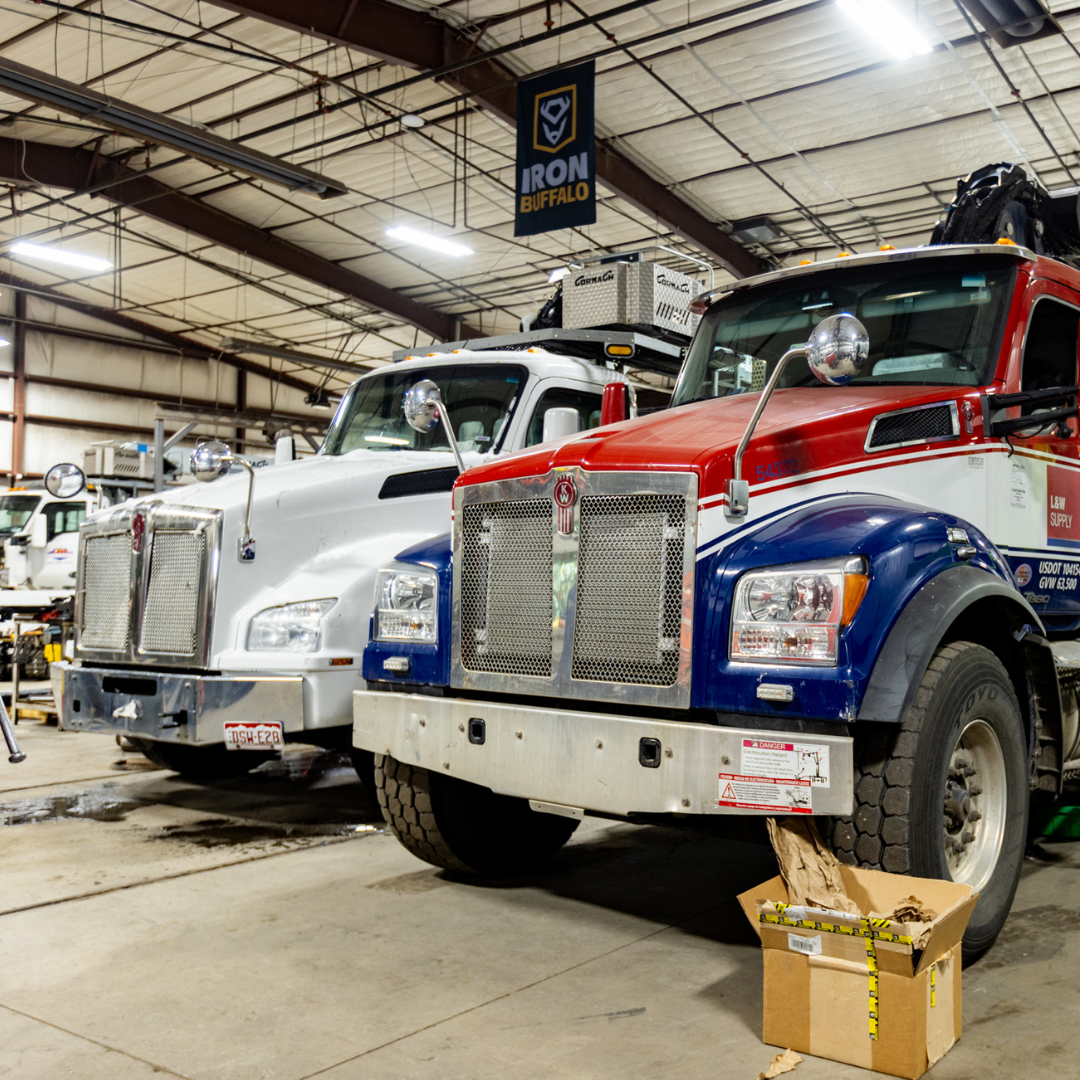
A commercial fleet maintenance program should include preventive maintenance, regular truck inspections, diagnostics, tire and alignment checks, brake and suspension inspections, DOT and safety inspections, and timely repairs. But an effective program is more than a list of services. It should provide fleet managers with a system to monitor each truck, identify problems early, and schedule repairs before they lead to unexpected downtime.
Commercial trucks should follow the manufacturer's recommended maintenance schedule, with inspections and service adjusted for mileage, engine hours, workload, operating conditions, vehicle age, and maintenance history.
Preventive Maintenance Should Be the Foundation
Preventive maintenance is the starting point for keeping commercial trucks reliable. It includes scheduled services such as fluid and filter changes, belt and hose inspections, battery checks, and other maintenance recommended by the truck manufacturer.
The maintenance schedule shouldn't be based on mileage alone. A truck that spends long hours idling or hauling heavy loads may need more frequent attention than one that runs mostly highway miles.
A good commercial fleet maintenance program should consider:
- Mileage and engine hours
- Type of work and load
- Driving conditions
- Vehicle age and condition
- Maintenance history
- Manufacturer service recommendations
Iron Buffalo provides commercial fleet maintenance services to help businesses keep their heavy-duty trucks properly maintained.
Regular Truck Inspections Catch Problems Between Services
A truck can receive scheduled maintenance and still develop a problem a few days or weeks later. That's why regular inspections are an important part of fleet maintenance.
Technicians should check components that affect safety and reliability, including tires, brakes, steering, suspension, lights, electrical components, fluid levels, belts, and hoses.
Driver feedback is important, too. Drivers are often the first to notice a new vibration, a warning light, an unusual noise, a change in steering, or a change in engine performance. Those observations can give technicians an early warning that something needs attention.
Truck Diagnostics Should Be Part of Fleet Maintenance
Yes. Truck diagnostics should be part of a commercial fleet maintenance program because some problems aren't visible during a routine inspection.
Diagnostic testing can help identify engine, electrical, sensor, emissions, and other system problems before they develop into more serious failures.
A warning light is a good example. The light tells you something needs attention, but it doesn't necessarily identify the underlying problem. Professional diagnostics can help determine what's actually causing the issue so the right repair can be made.
Iron Buffalo provides truck diagnostic services for heavy-duty commercial vehicles.
Don't Overlook Tires, Alignment, Brakes and Suspension
Tires and other wear components can tell you a lot about a truck's condition.
Uneven tire wear isn't always a tire problem. It can be a sign of poor alignment, worn suspension components, or steering issues. Replacing the tires without addressing the underlying cause can simply lead to another set of worn tires.
The same principle applies to brakes and suspension. Regular inspections can identify wear before it affects handling, safety, or other components.
If you notice unusual tire wear or changes in handling, our guide on how often commercial trucks should get a wheel alignment explains when an alignment check may be needed.
Include DOT and Safety Inspections
DOT inspections and compliance checks should be part of an ongoing fleet maintenance program, rather than something a fleet thinks about only when an inspection is coming up.
Regular inspections can help identify problems with brakes, tires, steering, suspension, lighting, and other safety-related components before they become a safety or compliance concern.
The goal is to keep trucks road-ready every day instead of trying to fix several problems at the last minute before an inspection.
Track Maintenance and Plan Repairs
A maintenance program also needs a system for tracking service history, upcoming maintenance, recurring problems, and repairs.
Good records help fleet managers answer practical questions:
- When was this truck last serviced?
- What repairs has it needed?
- What's coming due?
- Are we seeing the same problem repeatedly?
- Which trucks require more maintenance than others?
Most importantly, problems identified during inspections need to be addressed.
The goal of preventive maintenance isn't to eliminate repairs. It's to move repairs from an emergency situation to a planned maintenance situation.
When a worn component or developing problem is identified, scheduling heavy-duty truck repairs before failure can help reduce unexpected downtime and prevent additional damage. Learn more about how fleet maintenance can reduce downtime and repair costs and help keep trucks on the road.
What Makes a Fleet Maintenance Program Effective?
The most effective programs create a feedback loop between drivers, fleet managers, and technicians. Implementing that program requires a consistent approach to servicing and inspecting each truck. Our guide to how to service and maintain a commercial truck fleet covers the day-to-day maintenance practices fleet managers should have in place.
The maintenance schedule provides the baseline. Regular inspections identify developing problems. Driver feedback provides another source of early warning. Diagnostics help determine what's happening when a problem isn't obvious. Maintenance records track what has been done and what needs attention next.
For fleet managers, the goal is simple: know the condition of your trucks, stay ahead of scheduled maintenance, and address problems before they take a truck off the road.
Iron Buffalo provides commercial fleet maintenance and heavy-duty truck repair services for fleet operators in Denver and the surrounding Colorado areas.
Semi Truck Repair & Diesel Services in Denver, CO & Kalispell, MT
At Iron Buffalo, we provide expert semi truck and equipment repair, fleet maintenance, and specialty diesel services to keep your vehicles performing at their best.From semi-truck repair and hydraulic cylinder services to DOT inspections, mobile truck repair, and truck-mounted crane maintenance, our certified technicians deliver reliable solutions tailored to your needs. Whether you need routine preventive maintenance or complex engine diagnostics, our Denver, CO, and Kalispell, MT locations are equipped to handle the job. Contact us to schedule service and keep your semi trucks, trailers, and heavy equipment running strong.
Light, Medium, and Heavy Duty Vehicles & Fleets
Emissions Testing & CARB Clean Truck Check
Trailers, Commercial & Industrial Equipment
Loaders, Truck-Mounted Cranes & Conveyers
Services
Our Services
At Iron Buffalo, we provide expert heavy-duty truck and equipment repair, fleet maintenance, and specialty diesel services to keep your vehicles performing at their best.From semi-truck repair and hydraulic cylinder services to DOT inspections, mobile truck repair, and truck-mounted crane maintenance, our certified technicians deliver reliable solutions tailored to your needs. Whether you need routine preventive maintenance or complex engine diagnostics, our Denver, CO, and Kalispell, MT locations are equipped to handle the job. Contact us to schedule service and keep your trucks, trailers, and heavy equipment running strong.


Customer testimonials

Light, Medium & Heavy-Duty Truck Repair Services in Denver, CO & Kalispell, MT
Trusted Diesel Repair & Fleet Services - Keeping You on the Road & Job Site
Commerce City, CO
5590 E 55th St, Commerce, City, CO
Kalispel, MT
104 Rocky Cliff Lane, Unit A, Kalispell, MT
